Acrobat Ant Facts & Information
Everything you need to know about acrobat ants
What Do Acrobat Ants Look Like
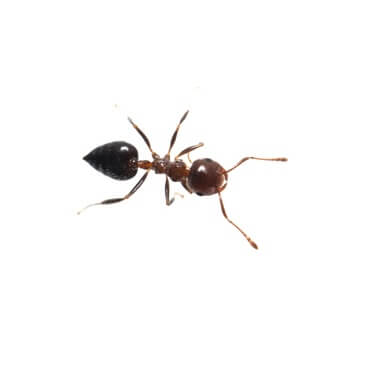
Acrobat ants are small, shiny ants (about 1/8 inch long) that are black in our area but may vary in appearance throughout the United States. They feature bent (elbowed) antennae that consist of 11 or 12 segments, ending in a 3-segmented club. They possess two small, sharp nodes on their waist and a pair of tiny spines on their thorax (back section). But their most definitive physical features are an unevenly separated thorax and a distinct, heart-shaped abdomen. They get their name from a unique defensive behavior: when alarmed or disturbed, they will acrobatically arch and raise their heart-shaped abdomen over their head and thorax, resembling a scorpion (acrobat ants don’t sting although they will bite if their colony is disturbed).Not the ant you have?
How Did I Get Acrobat Ants
It’s likely you got acrobat ants because an outdoor colony migrated inside from your yard or they found a vulnerable, moisture-damaged area in your home to nest. While they prefer outside, they typically end up indoors by entering through cracks, gaps, open doors, etc. They love rotting or damp wood, so, you have roof leaks, leaky pipes, or water damage, they will be attracted to your home and happily nest in those wall voids, window frames, or doorframes. However, acrobat ants are NOT “wood destroying insects” like carpenter ants are.
Where Do Acrobat Ants Live
Acrobat ants live throughout the United States – including our area! They usually nest outdoors in dead or decaying wood, like rotting logs, tree stumps, and under rocks but they also love stacked firewood and leaf piles. Because they are highly adaptable creatures they can live both outside and in. They often invade homes to nest in wood with moisture damage, wall voids, foam insulation, and even in old electrical boxes. They’re certainly not picky.
What Problems Do Acrobat Ants Cause
Acrobat ants are mostly a nuisance, but they can cause property damage. They often nest in rotting or moisture-damaged wood and have a habit of stripping insulation from electrical and telephone wires, which can cause short circuits and create fire hazards. They rarely cause the initial damage themselves, but they actively hollow out and enlarge cavities in wood that has already been softened by decay, moisture, or other pests (like termites). And our favorite: when threatened, disturbed, or crushed, they emit a highly repulsive, foul odor.
How Do I Prevent Acrobat Ants
To prevent acrobat ants, focus on moisture control and physical exclusion. Clean up food spills and loose pet food, remove potential nesting sites like rotted wood, stumps, logs, and dead trees, and cut landscaping back away from your home and especially if it touches your roof. Indoors, fix all plumbing leaks and store food in airtight containers to remove their foraging incentives. Bringing in a professional to identify even the small cracks and tears (and even repair them) is your best defense against acrobat ants and many other pests.
WHY OPC FOR ACROBAT ANT CONTROL
We’re passionate about keeping ants out of your home or business because we live and work here – it’s our neighborhood, too. We’ve been keeping homes and businesses in Kentucky, Ohio, Illinois, Indiana, Wisconsin, and Tennessee safe from pests since 1972. OPC Pest Services has the experience you can trust.
Expert pest control since 1972
Quality Pro certified company
Satisfaction guarantee

Need help with acrobat ants?
GET MY QUOTE
