Bald-Faced Hornet Facts & Information
Everything you need to know about bald-faced hornets
What Do Bald-Faced Hornets Look Like
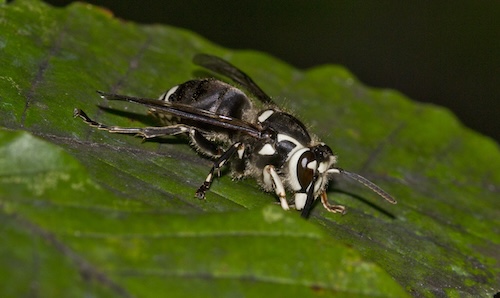
Bald-faced hornets are a type of social wasp known for their distinctive black-and-white coloring. Despite their common name, they are actually wasps rather than true hornets. They have mostly black bodies with white or ivory markings on their faces, thoraces, and abdomens. Adult bald-faced hornets typically grow to about 5/8 to 3/4 inch long, with queens growing slightly larger. They have six legs, two pairs of wings, long antennae, and a narrow waist between the thorax and abdomen. Bald-faced hornets have smooth stingers, allowing them to sting multiple times.
Seeing bald-faced hornets flying around your property can be a sign that a nest is nearby. Their fully formed nests are gray, papery structures that enclose paper honeycomb cells. By comparison, paper wasps construct open paper nests with no covering. Nests can be found hanging from tree branches, under roof overhangs, on porches, attached to the sides of buildings, or around other protected areas. Bald-faced hornets are highly defensive of their nests and may aggressively attack anything they perceive as a threat. Because of this, you should never attempt bald-faced hornet nest removal yourself. Not the stinging pest you have?
Seeing bald-faced hornets flying around your property can be a sign that a nest is nearby. Their fully formed nests are gray, papery structures that enclose paper honeycomb cells. By comparison, paper wasps construct open paper nests with no covering. Nests can be found hanging from tree branches, under roof overhangs, on porches, attached to the sides of buildings, or around other protected areas. Bald-faced hornets are highly defensive of their nests and may aggressively attack anything they perceive as a threat. Because of this, you should never attempt bald-faced hornet nest removal yourself. Not the stinging pest you have?
How Did I Get Bald-Faced Hornets?
Bald-faced hornets are common outdoor insects, so having them around your property does not necessarily mean you’re doing anything to attract them. They hunt other insects and spiders for protein, particularly when they are feeding developing larvae. They may also be attracted to sugary foods, fruit, and other sweet substances as the season progresses and food sources get scarcer. Ultimately, bald-faced hornets are simply part of the natural environment and are often beneficial when their nests are in locations that don’t threaten people or pets.
Open garbage cans, uncovered food, fallen fruit, and sugary drinks can all provide bald-faced hornets with easy access to food. An open soda can left outside during a cookout, for example, can quickly become an attractive food source. Keeping food and garbage covered and cleaning up spills can help reduce the things that attract these stinging insects.
Open garbage cans, uncovered food, fallen fruit, and sugary drinks can all provide bald-faced hornets with easy access to food. An open soda can left outside during a cookout, for example, can quickly become an attractive food source. Keeping food and garbage covered and cleaning up spills can help reduce the things that attract these stinging insects.
Where Do Bald-Faced Hornets Live
Bald-faced hornets are social insects that live together in annual colonies. A fertilized queen that survived the winter emerges in the spring and begins constructing a small nest. She lays eggs and cares for the first generation of workers, which then take over nest-building, foraging, and caring for the developing larvae. As the colony grows, the nest becomes larger and can eventually contain hundreds of hornets.
The hornets create the paper coverings on their nests by chewing wood fibers and mixing them with saliva. Nests are commonly built several feet off the ground in trees and shrubs, but they may also be attached to buildings or utility poles. Their nests can become quite large as the colony develops.
Bald-faced hornet colonies are annual. The workers and males die when temperatures drop in the fall, while newly produced queens leave the nest and find protected places to shelter from the winter weather. The old nest is not reused the following year.
Bald-faced hornets are predators and play an important role in the environment by feeding on other insects. However, their defensive behavior can make a nest located near a home, business, playground, walkway, or other frequently used areas a significant concern.
The hornets create the paper coverings on their nests by chewing wood fibers and mixing them with saliva. Nests are commonly built several feet off the ground in trees and shrubs, but they may also be attached to buildings or utility poles. Their nests can become quite large as the colony develops.
Bald-faced hornet colonies are annual. The workers and males die when temperatures drop in the fall, while newly produced queens leave the nest and find protected places to shelter from the winter weather. The old nest is not reused the following year.
Bald-faced hornets are predators and play an important role in the environment by feeding on other insects. However, their defensive behavior can make a nest located near a home, business, playground, walkway, or other frequently used areas a significant concern.
Problems Caused by Bald-Faced Hornets
Bald-faced hornets can be particularly concerning because they are extremely defensive when their nest is disturbed. Unlike many solitary stinging insects, bald-faced hornets live in colonies and will work together to protect their nest. They can sting repeatedly, and they may pursue an intruder for a considerable distance from the nest (translation: they will chase after you!).
A bald-faced hornet sting can cause pain, redness, swelling, and itching. Some people may experience a more severe allergic reaction, including widespread hives, difficulty breathing, swelling of the face or throat, dizziness, or anaphylaxis. Anyone experiencing signs of a serious allergic reaction should seek emergency medical assistance immediately. Even if you aren’t experiencing them, seeing a medical professional if you’re stung multiple times, is a good idea.
If you are stung and experience only a mild local reaction, wash the area with soap and water and apply a cold compress or ice pack to help reduce pain and swelling. Avoid swatting at bald-faced hornets, particularly near a nest, since this can provoke additional defensive behavior.
Insect repellents are not a reliable way to protect yourself from an established bald-faced hornet nest. The best way to prevent stings is to avoid disturbing the nest and keep people and pets away from the area. If a nest is located near a home, business, walkway, playground, or another area where people regularly spend time, a professional bald-faced hornet nest removal company can help eliminate the threat.
A bald-faced hornet sting can cause pain, redness, swelling, and itching. Some people may experience a more severe allergic reaction, including widespread hives, difficulty breathing, swelling of the face or throat, dizziness, or anaphylaxis. Anyone experiencing signs of a serious allergic reaction should seek emergency medical assistance immediately. Even if you aren’t experiencing them, seeing a medical professional if you’re stung multiple times, is a good idea.
If you are stung and experience only a mild local reaction, wash the area with soap and water and apply a cold compress or ice pack to help reduce pain and swelling. Avoid swatting at bald-faced hornets, particularly near a nest, since this can provoke additional defensive behavior.
Insect repellents are not a reliable way to protect yourself from an established bald-faced hornet nest. The best way to prevent stings is to avoid disturbing the nest and keep people and pets away from the area. If a nest is located near a home, business, walkway, playground, or another area where people regularly spend time, a professional bald-faced hornet nest removal company can help eliminate the threat.
How Do I Prevent Bald-Faced Hornets
Because bald-faced hornets are naturally occurring predators, completely preventing them from entering your property is not always possible. However, you can make your property less attractive by eliminating accessible food sources. Keep garbage cans tightly sealed and make sure food waste is placed inside secure trash bags. Clean up spills from sugary drinks and food after outdoor gatherings and pick up fallen fruit from trees before it becomes overripe.
Bald-faced hornets also hunt other insects to feed their young. Maintaining an effective year-round pest control program can help reduce the number of insects around your property that provide food for these predators, forcing them to seek food elsewhere. While bald-faced hornets are beneficial because they help control other pests, a colony located close to people can create a stinging hazard.
When spending time outdoors, especially during late summer and early fall when colonies are well established, keep food and drinks covered and be aware of hornet activity. If you spot bald-faced hornets repeatedly flying to and from one location, there may be a nest nearby. Don’t investigate or attempt to remove it yourself. Professional bald-faced hornet control can safely address nests and help protect the people, guests, and pets who use your property.
Bald-faced hornets also hunt other insects to feed their young. Maintaining an effective year-round pest control program can help reduce the number of insects around your property that provide food for these predators, forcing them to seek food elsewhere. While bald-faced hornets are beneficial because they help control other pests, a colony located close to people can create a stinging hazard.
When spending time outdoors, especially during late summer and early fall when colonies are well established, keep food and drinks covered and be aware of hornet activity. If you spot bald-faced hornets repeatedly flying to and from one location, there may be a nest nearby. Don’t investigate or attempt to remove it yourself. Professional bald-faced hornet control can safely address nests and help protect the people, guests, and pets who use your property.
WHY OPC FOR BALD-FACED HORNET REMOVAL
We’re passionate about keeping all species of hornets out of your home or business because we live and work here – it’s our neighborhood, too. We’ve been keeping homes and businesses in Kentucky, Ohio, Illinois, Indiana, and Wisconsin safe from pests since 1972. OPC Pest Services has the experience you can trust.
Expert pest control since 1972
Quality Pro certified company
Satisfaction guarantee


Need help with hornets?
GET MY QUOTE
