A handful of dark insects are crawling near the back door. Or you find tiny, papery wings scattered across a windowsill. Your stomach drops a little. Is it termites?
That feeling is normal. Almost every homeowner has it at some point. Most of the time, a calm look at a few body features answers the question.
This guide shows you how to tell black ants from termites without special tools or training. You’ll learn the three features that separate them, what each insect looks like up close, and the signs each one leaves behind. You’ll also learn when a professional should take a look. Clear information makes this easier to handle.
The one-sentence answer: Ants have a pinched waist, bent antennae, and uneven wings. Termites have a thick waist, straight antennae, and four matching wings. Ants don’t eat wood. Termites do.
The Three-Point Check: Waist, Antennae, Wings
Three features give you the answer. Check them in this order. If you can, catch one insect in a clear jar or press a piece of clear tape over it so you can study it in good light.
1. Check the Waist First
This is the fastest and most reliable clue. An ant’s body cinches in sharply between its middle and rear sections. Think of an hourglass or a wasp.
A termite has no cinch. Its body runs thick and even from front to back, almost like a grain of rice. If you see a pinch, you’re looking at an ant.
2. Look at the Antennae
Ant antennae have a joint. They run straight out from the head, then bend at a sharp angle, like a bent arm.
Termite antennae have no joint. They point forward in a straight, gentle line and look like a strand of tiny beads.
3. Compare the Wings
This step only applies to winged insects, often called swarmers. Winged ants have two pairs of wings in two sizes. The front pair is clearly longer than the back pair.
Winged termites have four wings of equal length. The wings stretch well past the end of the body – often about twice its length. When the insect rests, they lie flat and stack neatly along its back.
Here’s a simple rule: pinch, bend, and uneven wings point to an ant. No pinch, no bend, and matching wings point to a termite.
What Little Black Ants Look Like (Monomorium minimum)
Now that you know the three checks, let’s look closer at the ant most people find indoors. Little black ants are among the most common household ants in the United States. They tend to show up in kitchens, near sinks, and wherever crumbs collect.
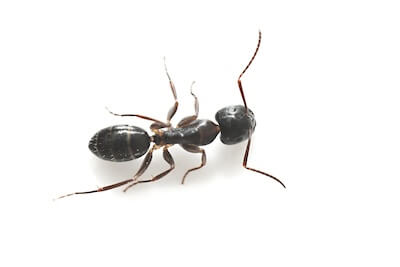
You can recognize them by these traits:
- Size: Very small. Workers are about 1/16 of an inch (1.5 mm) long. Queens reach about 1/8 of an inch (3-4 mm).
- Color: Shiny black, jet black, or deep brown.
- Body: Slender, smooth, and glossy. Their waist has two segments. The thorax has an uneven, rounded outline with no spines.
- Antennae: Twelve segments that end in a three-segment club. Like all ants, the antennae bend at an elbow.
Their size is a helpful clue. A little black ant worker is smaller than most termites you’re likely to see. If the insect is barely bigger than a pencil dot, it’s probably an ant.
What Termites Look Like
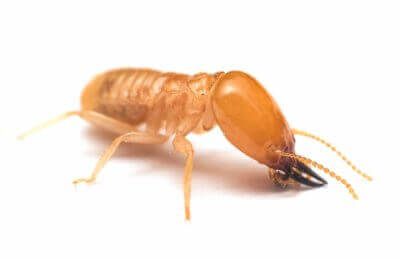
Termites look different depending on their job. A colony has three main groups, and each has its own shape and color. Knowing all three helps you recognize them, even if you only see one.
Most termites measure 1/8 to 1/2 inch long. Kings and queens can grow past an inch. Their bodies are soft, and their colors range from creamy white to pale brown, amber, dark brown, or black.
Workers: The Wood Eaters
Workers make up most of the colony. They’re about 1/8 to 1/4 inch long, wingless, and soft. Their bodies look creamy white or almost see-through.
People often mistake them for “white ants” or even maggots. Workers do the chewing. They’re the reason termites damage wood.
Soldiers: The Guards
Soldiers are about the same size as workers, with pale bodies. What sets them apart is the head. It’s large, hard, and dark, with long, strong jaws called mandibles.
Soldiers protect the colony. They use their jaws to grab and pinch anything that threatens the nest.
Swarmers: The Ones You’ll Most Likely See
Swarmers, also called alates or reproductives, are dark brown, black, or amber. They measure about 1/4 to 1/2 inch long. They carry two pairs of long, pale, or clear wings, all the same length.
Swarmers leave the colony to mate and start new ones. Afterward, they break off their wings. Small piles of dropped wings are often the first sign a homeowner notices.
These are the termites people confuse with black ants most often. They’re dark. They fly. They arrive in groups.
Why Black Ants and Termites Get Confused
The mix-up isn’t a mistake on your part. Black ants, especially carpenter ants, share real habits with termites. Understanding the overlap makes the differences easier to trust.
Similar Swarming Seasons
Both insects send out winged reproductives in large numbers to mate and form new colonies. Both usually do it in spring or early summer. A cloud of winged insects looks the same at first, no matter what’s inside it. The details tell you which one you have.
Shared Interest in Wood and Moisture
Both turn up near lumber, rotting wood, and spots with water damage. Termites often damage basements and crawl spaces with exposed soil. They also go after wood framing that touches soil or concrete slabs.
In basements, termite damage and mud tubes commonly appear on joists, subflooring, sill plates, and concrete or brick walls. Carpenter ants also nest in damp wood, which blurs the line further. One difference stands out, though. Carpenter ants will build nests under the insulation between floor joists. Termites won’t.
Big, Organized Colonies
Both insects live in large social groups. Both can find their way inside through small foundation cracks or gaps around windows.
The habits overlap. The bodies don’t.
Black Ants vs. Termites: Comparison Chart
This chart puts the key differences side by side. Keep it handy when you’re looking at an insect up close.
| What to Check | Black Ants / Carpenter Ants | Termites |
| Waist | Sharply pinched between body sections, with an hourglass shape | Broad and even, with no visible pinch |
| Antennae | Bent at a joint, like an elbow | Straight, beaded, or thread-like |
| Wings | Two sizes: the front wings are longer than the back wings | One size: all four wings match and extend far past the body, often about twice its length |
| What they eat | Not wood. Little black ants eat sweets and grease. Carpenter ants dig nests in damp wood and push out shavings called frass. | Wood, for the cellulose inside it |
| What they leave behind | Visible trails, sawdust-like frass, and small soil mounds | Mud tubes, shed wings, and hollowed wood |
Signs You May Have Termites
Termites work out of sight. Colonies live in the soil, and workers stay inside the wood they eat. You may never see a live termite. These clues tell the story instead.
- Mud tubes. Termites build narrow, covered tunnels from soil and debris. The tubes let them cross brick, stone, or concrete to reach wood. Check basement and crawl space foundation walls, plus other quiet spots like sill plates and joists.
- Swarmers indoors. Winged termites inside your home or business usually mean an established colony is nearby, most likely in the structural wood. Dropped wings near windows and doors point the same way.
- Wood that sounds hollow. Termites eat from the inside out. A board can look fine while it’s thinning underneath. Tap suspect wood and listen for a dull, empty sound.
- Paint that gives way. Paint often forms a thin skin over termite damage. A screwdriver can push through it to the tunnels below.
One sign isn’t a reason to panic. It’s a reason to get a professional opinion.
Signs You May Have Little Black Ants
Little black ants are easier to find. They forage in the open and follow food and water. Here’s what to watch for:
- Steady trails. A single-file line moving across counters, floors, or baseboards. The ants follow a scent path laid down by scouts.
- Kitchen and bathroom activity. Repeat sightings near sinks, pet bowls, pantries, or sticky spills. Sugar, grease, and moisture pull them in.
- Winged ants inside. Groups of winged ants indoors, or ants coming out of cracks in walls, floors, or window frames. This usually means a mature colony is sending out a mating flight.
- Outdoor mounds. Small piles of soil or sand along your foundation, under patio pavers, or in pavement cracks.
Little black ants don’t harm wood or framing. They can still get into food and keep coming back. A steady trail means a colony is close, and the lasting fix starts at the nest.
When Identification Isn’t So Simple
The three-point check works well, but it has limits. Some situations make a home diagnosis harder.
- You only see damage, not insects. Hollow wood or frass alone doesn’t always point to one pest.
- You found wings, but no bodies. Loose wings are a strong termite clue, but a closer look at the source helps confirm it.
- You have both. Ants and termites can show up in the same home at the same time.
- The insect is crushed or damaged. A broken body can hide the waist and antennae.
In any of these cases, a trained eye saves time and worry.
Frequently Asked Questions
Q: How do I tell black ants and termites apart?
A: Start with the waist. Black ants have a narrow, pinched waist and bent antennae. Termites have a thick, straight waist and straight antennae. Ants don’t eat wood, but termites do.
Q: What’s the easiest way to tell flying ants from flying termites?
A: Look at the wings, then the waist. Flying ants have longer front wings than back wings and a pinched waist. Flying termites have four wings of equal length and a broad waist with no pinch.
Q: Do black ants eat wood?
A: No. Little black ants eat sweets, grease, and food scraps. Carpenter ants tunnel through damp wood to make nests, but they don’t eat it. Termites are the wood eaters.
Q: Are little black ants a threat to my home’s structure?
A: No. Little black ants don’t damage wood or framing. They can contaminate food and become a stubborn nuisance in kitchens and pantries.
Q: Why are there wings on my windowsill?
A: Small piles of wings near windows, doors, or lights often come from termite swarmers. Termites shed their wings after mating. Finding them indoors is a good reason to schedule an inspection.
Q: What time of year do ants and termites swarm?
A: Both usually swarm in spring and summer. Warm days and moisture after rain often trigger swarming.
Q: What do termite mud tubes look like?
A: Mud tubes are thin tunnels about the width of a pencil, built from soil and debris. They often run up foundation walls, piers, or other surfaces between the ground and wood.
Let OPC Pest Services Give You a Clear Answer
You now know the three-point check: waist, antennae, wings. You know termites hide and ants travel in the open. You know which signs deserve a closer look.
Still, uncertainty is hard to live with. You shouldn’t have to guess about your home.
Our trained OPC Pest Services technicians will identify the insect, trace where it’s coming from, and explain what we find in plain terms. Then we’ll walk you through a clear plan for your home or business. No pressure. No guesswork. Just honest answers.
If you’ve spotted swarmers, mud tubes, or an ant trail that keeps returning, contact OPC Pest Services to schedule an inspection. We’ll help you understand what’s there and what comes next. After all, we’ve been outsmarting pests since 1972!
