Brown Banded Cockroach Facts & Information
Knowing how to identify a cockroach is your first step to controlling it.
What Do Brown-Banded Cockroaches Look Like
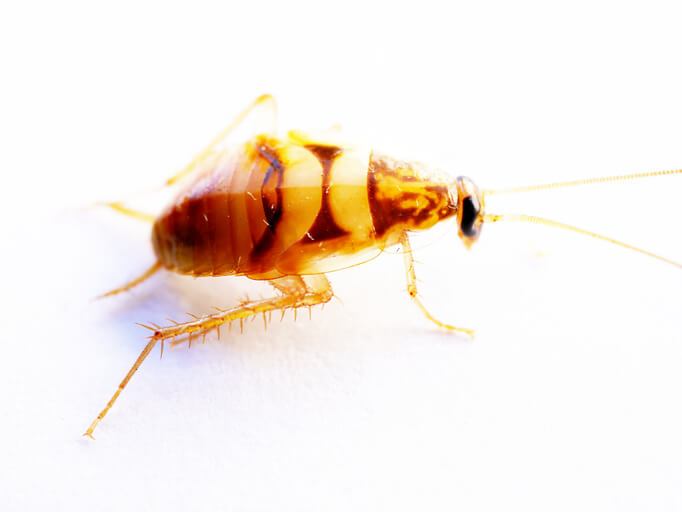
Brown-banded cockroach nymphs are tiny, wingless, and fast-moving insects, measuring about 1/8 to 1/4 inch long. They are dark brown to blackish in color with two distinct, light-colored bands running horizontally across their backs. These bands are often more prominent on nymphs than on adults, appearing on their abdomens. When grown, like the name suggests, adult brown-banded cockroaches have two light brown bands across their dark brown bodies. Adult brown-banded cockroaches only grow to about 1/2 inch long. Male brown-banded cockroaches have full wings that reach beyond the tip of their pointed abdomens. Female brown-banded cockroaches have underdeveloped wings that prohibit them from flying and tend to be much darker than males’ wings. These roaches are oval in shape with six legs and two long antennae. Their coloring helps them blend in among furniture, cabinets, and food.
Where Are Brown-Banded Cockroaches Found
Brown-banded cockroaches are domestic cockroaches and generally are found indoors occupying the warmest parts of homes and buildings. It’s less likely they will be in restaurants than other species of cockroaches, but just like all opportunistic pests, they will show up wherever food and shelter are! But, unlike their cousins, these cockroaches prefer dry spaces where the temperature is around 80° F and will most likely be located near the ceiling and away from sources of water. Common locations include upper kitchen cabinets, especially near the refrigerator where warmth is, inside furniture like desks and dressers, and in closets. They are known to live out of view, on the tops of wall-mounted kitchen cabinets. Like all cockroaches, they prefer to stay out of sight, which is why their populations can grow easily and quickly. They also have a very broad diet making it easy for them to survive just about anywhere warm and dry.
How Did I Get Brown-Banded Cockroaches
Brown-banded roaches come into your home in search of two things: food and shelter. They can flatten their bodies enough to get into homes through the slimmest of cracks and crevices. They can also come in on deliveries, bags, boxes, etc. If you live close to your next-door neighbor, in a two-family home, or an apartment if one room or unit has brown-banded cockroaches, they can easily squeeze their way into your home or unit. Once there, they do not need much to survive – and even thrive.
Brown-banded cockroaches search for warm, dry places, which is why they often show up in higher spots like cabinets or closets, or behind appliances. They are drawn to steady heat from electronics and prefer areas where they can hide in small cracks. And while they may come in by hitchhiking on people or packages, they will stay if you have any of those areas they find ideal.
Brown-banded cockroaches search for warm, dry places, which is why they often show up in higher spots like cabinets or closets, or behind appliances. They are drawn to steady heat from electronics and prefer areas where they can hide in small cracks. And while they may come in by hitchhiking on people or packages, they will stay if you have any of those areas they find ideal.
what Problems do brown-banded cockroaches cause
All cockroaches bring problems with them, but the brown-banded species brings a few extras. Brown-banded cockroaches are vectors for over 30 types of bacteria, including E. coli and Salmonella, which they carry from filth and deposit on food surfaces. Their droppings, saliva, and shed skin contain allergens that trigger allergic reactions and cause or worsen asthma symptoms, especially in children. And with their less-than-discerning palate, they will happily feed on starchy materials, damaging book bindings, wallpaper, stamps, and furniture. Because they search for warm, dry areas, they often hide behind picture frames, in light switches and sometimes electrical appliances. As a result, finding all of their potential living spaces may be time-consuming.
How Can I Prevent Brown-Banded Cockroaches
It’s difficult to completely prevent brown-banded cockroaches, but there are a few tips and tricks that can help. Since they prefer warm, dry, and high-up hiding spots (ceilings, cabinets, furniture), try to eliminate those attractive areas. And they love food crumbs, especially starchy materials, so wipe and sweep up spills in a timely manner. It’s key to keep it clean in your home, too. That includes vacuuming frequently, decluttering, emptying pet food dishes at night (this will also help keep roaches from contaminating your pet’s food), and deep cleaning often. Storing food in airtight containers, using baits, and inspecting incoming items like groceries can also help. Exclusion strategies are recommended to help keep out all pests – including cockroaches. Use caulk to fill cracks in walls, crevices in cabinets, and gaps behind baseboards. It’s also best to contact pest control professionals like OPC Pest Services, which specialize in developing sustainable cockroach management programs.
WHY OPC FOR brown-banded cockroach control
We’re passionate about controlling cockroaches because we live and work here – it’s our neighborhood, too. We’ve been keeping homes and businesses in Kentucky, Ohio, Indiana, Illinois, Wisconsin, and Tennessee safe from pests since 1972. OPC Pest Services has the experience you can trust.
Expert pest control since 1972
Quality Pro certified company
Satisfaction guarantee.

Say Goodbye to Brown-Banded cockroaches.
GET MY QUOTE
